
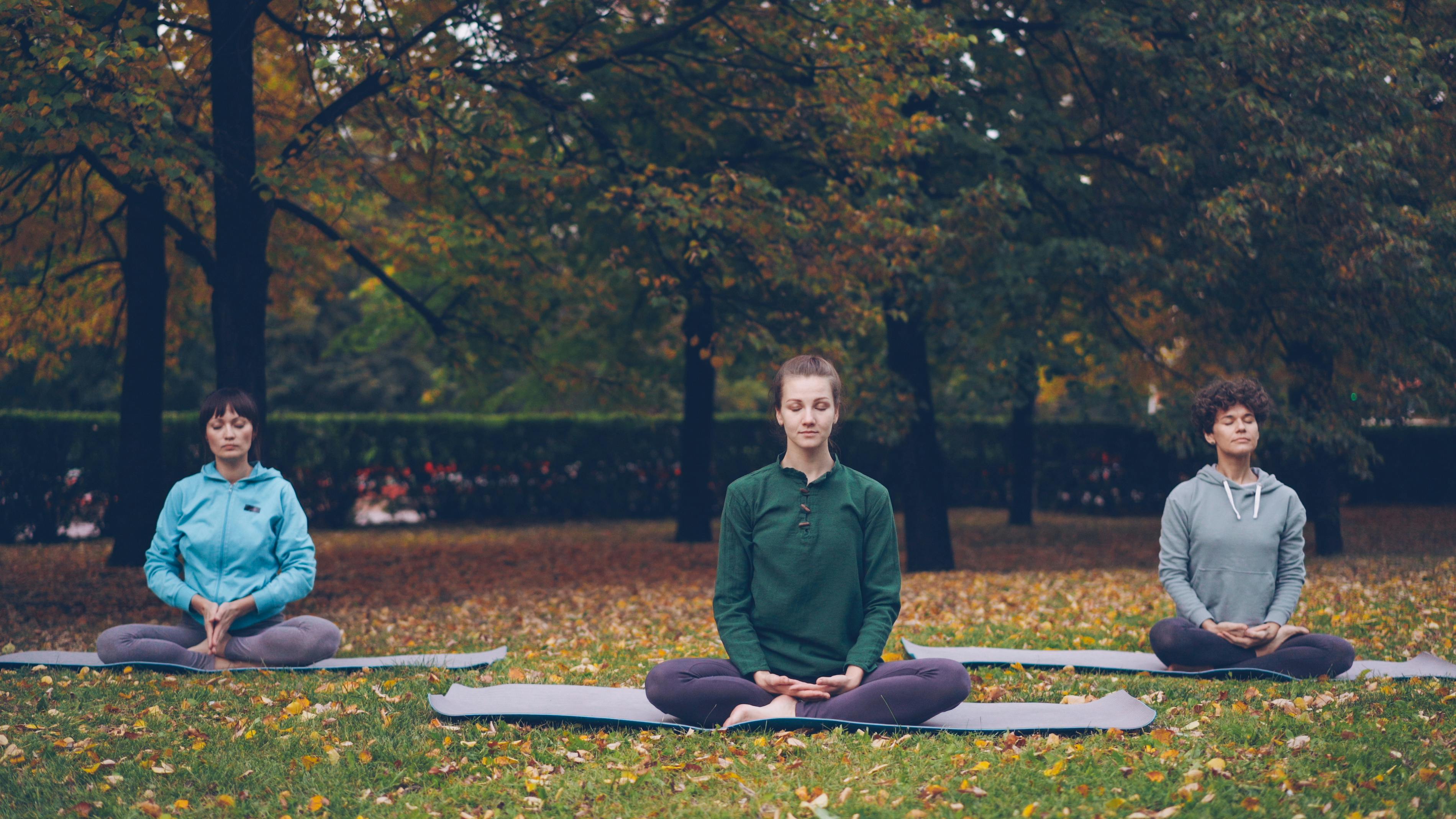
For many beginners, meditation can feel like a contradiction: you’re told to “do nothing,” yet somehow do it correctly. Sit still, clear your mind, don’t think; relax. It’s no wonder so many people give up before they begin.
But meditation isn’t about forcing silence or achieving perfection. At its core, it’s simply the practice of paying attention; on purpose, in the present moment. And there isn’t just one way to do it.
You can breathe. You can hum. You can walk, sway, or even dance. Every meditation practice begins with the same anchor: awareness.
Breathing is the most accessible place to start. It’s always with you, always changing, always grounding. Sit comfortably or lie down. Close your eyes if it feels natural. Notice the inhale, then the exhale. You don’t need to change anything; just observe. Your mind will wander. That’s not failure; that’s the practice. Each time you return to the breath, you strengthen your ability to focus and gently let go.
For some, stillness feels natural. For others, it feels like friction. The good news? Meditation isn’t limited to silence.
Sound
Sound meditation invites you to rest your attention on what you hear. This could be music, nature sounds, or a sustained tone. Instead of following your thoughts, you follow vibration.
Humming, Chanting, and Singing
Using your own voice can be surprisingly powerful. Humming or chanting creates gentle vibrations in the chest, throat, and head—often producing a calming, almost soothing effect. It’s less about musical ability and more about sensation.
Guided Meditation
If silence feels uncomfortable, being “talked through” the experience can help. A voice gives your mind something to follow, easing you into presence.
Movement
Meditation can happen in motion. Walking slowly, feeling each step, noticing your body shift and balance. This is meditation.
Dance as Awareness
Free, intuitive movement, especially with music, can become a form of meditation when you stay present with the sensations in your body rather than how it looks.
The nervous system responds to rhythm. Slow, steady sounds can signal safety to your nervous system. This may help shift you out of a stressed (fight-or-flight) state into a calmer (rest-and-digest) state. Breathing naturally slows down. When you listen to or create long, drawn-out tones, your breathing often slows to match. Slower breathing is directly linked to relaxation. Attention becomes anchored. A consistent sound gives your mind something stable to focus on, reducing mental wandering. When you hum or chant, you may feel subtle vibrations in your body, especially in your chest and skull. These sensations can feel soothing and help you stay present.
You don’t need special tools to meditate. Your breath is enough. But if you’re drawn to texture, sound, or ritual, you can explore:
• Sitting quietly with your breath
• Humming softly to feel internal vibration
• Holding a quartz crystal as a point of focus
• Moving, walking, or dancing with awareness
Meditation isn’t about becoming a different person. It’s about noticing who you already are; moment by moment. Some days look like sitting in silence. Other days it looks like swaying in your kitchen, eyes closed, following the rhythm of a song. Both count. In the end, meditation isn’t about how it looks; it’s about how present and aware you are in your body and soul, connecting to the divine. Practicing helps you vibrate at a high frequency during the day and be more present in daily life.
To experience a relaxing, hands-on session, contact Susan Fiegl at Elements of Life at (716) 861-4546. Her office is located at 1325 Millersport Hwy, Suite 111, in Williamsville, New York. Make an appointment today at elementsoflifemassage.com to sustain piece of mind.